https://www.mining.com/web/brazilian-ni ... lion-mine/Brazilian Nickel seeks anchor investor for $1.4 billion mine
Bloomberg News | June 17, 2026
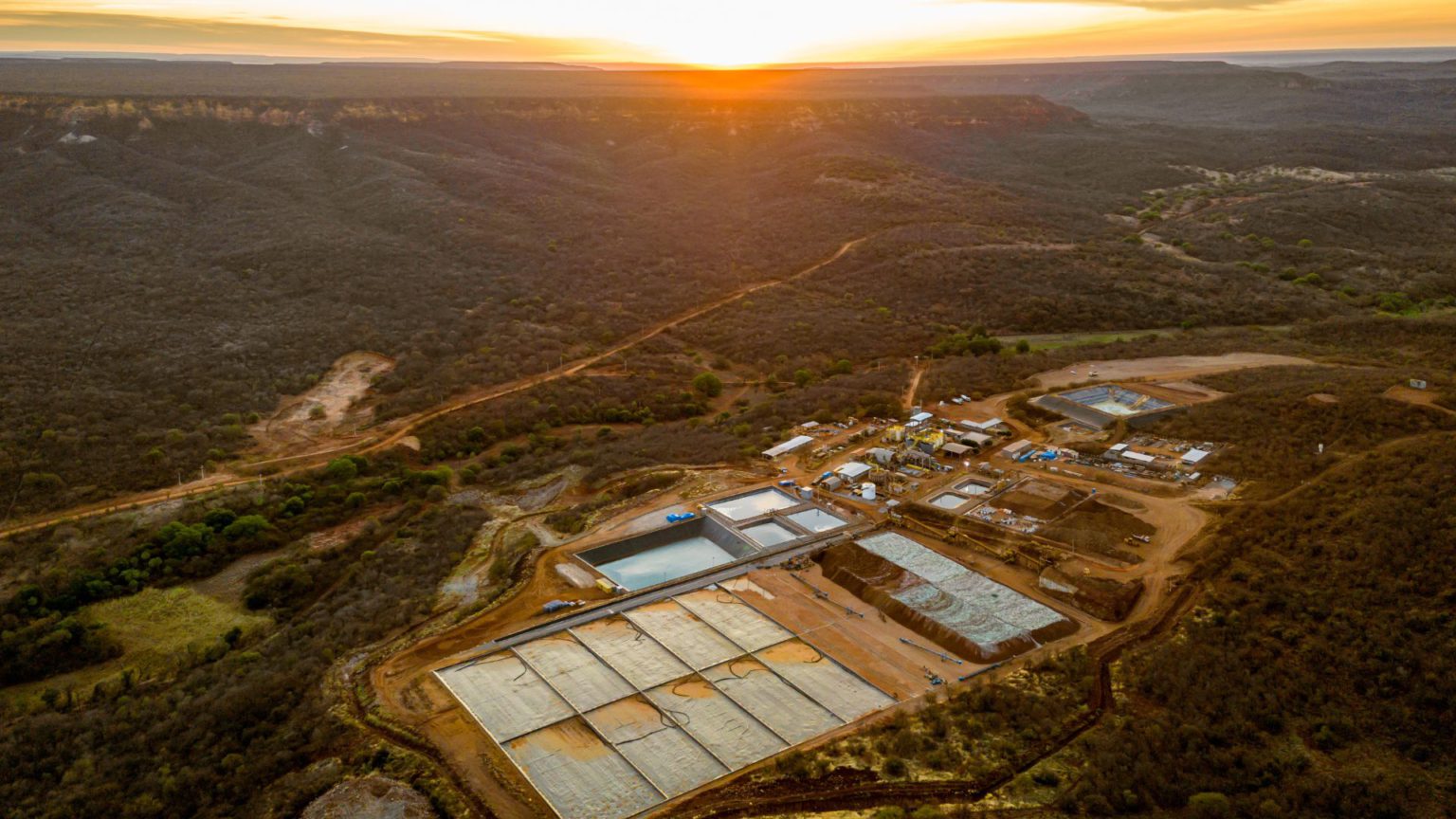
Piauí nickel mine project. Credit: TechMet Ltd.
Brazilian Nickel Ltd. is seeking an anchor investor to help attract more equity funding for its planned $1.4 billion nickel and cobalt mine in northeastern Brazil.
The developer of the Piauí nickel project is using Rothschild & Co. as an adviser for global debt and equity financing while Brazilian investment bank Bradesco BBI is advising for raising $100 million among investors and funds within the South American nation, chief financial officer Andre Simao said in a Monday interview. The company also seeks government funding from Canada, Europe and the Brazilian development bank, BNDES, Simao said.
.....................
Brazilian Nickel, which is backed by critical minerals investment firm TechMet Ltd., aims to produce 28,000 tons of nickel and 1,000 tons of cobalt a year across the first 10 years of operation, with production planned to start in the first half of 2030, according to Simao.
Nickel
Modérateurs : Rod, Modérateurs
-
energy_isere

- Modérateur

- Messages : 107758
- Inscription : 24 avr. 2005, 21:26
- Localisation : Les JO de 68, c'était la
- Contact :
Re: Nickel
suite de ce post du 15 dec 2024 : viewtopic.php?p=2403879#p2403879
-
energy_isere
- Modérateur
- Messages : 107758
- Inscription : 24 avr. 2005, 21:26
- Localisation : Les JO de 68, c'était la
- Contact :
Re: Nickel
suite de ce post du 01 dec 2024 : viewtopic.php?p=2403250#p2403250
https://www.mining.com/nexmetals-upgrad ... o-1-1b-lb/NexMetals upgrades Selkirk copper resource to 1.1B lb.
Staff Writer | June 24, 2026
NexMetals Mining (TSXV, NASDAQ: NEXM) says its Selkirk copper-nickel-PGE project could now be a “significant contributor” to its Botswana-focused growth strategy after upgrading its resource by nearly 70%.
In the resource update on Wednesday, the Toronto-based miner said the project now holds approximately 1.1 billion lb. of copper equivalent (CuEq) in the indicated category, with 78.2 million grading 0.66% CuEq, following a significant conversion from the inferred category driven by successful re-assaying and twin drilling.
Following the conversion, there are still 15.1 million in inferred tonnes grading 0.60% CuEq, containing 200 million lb. of CuEq.
The total contained copper equivalent, according to NexMetals, represents a 63% increase to the project’s metal inventory compared to its last estimate in 2024, driven largely by better metallurgical recoveries and the inclusion of cobalt, silver and gold as payable metals. Goldfutures trading
Moreover, the company noted that metal price changes had “a minimal net impact” relative to the 2024 estimate, reflecting Selkirk’s diversified polymetallic metal mix.
Shares of NexMetals surged nearly 10% on the update, before erasing most of its gains amid continued weakness in metals and equities. The company’s market capitalization stands at C$114 million ($80 million).
Elevated project status
NexMetals views the upgrade as “an important technical milestone” for the Selkirk project that enhances its resource confidence and reduces development risk.
With the expanded resource, the company said the project has now “evolved into a strategically important, multi-commodity critical metals asset” with the scale and development potential. Previously, Selkirk was “assigned limited value as a secondary asset” within the portfolio, it added.
The project is located approximately 75 km northeast of the company’s flagship Selebi project, both hosting past-producing copper-cobalt-nickel mines that the company has been re-developing since 2019. Selkirk comprises a mining licence covering 14.6 sq. km, while Selebi covers a single mining licence of 115 sq. km.
“When we acquired the Selebi and Selkirk projects out of liquidation in 2022, we saw an opportunity to unlock value through modern exploration and disciplined technical work, and today’s resource update at Selkirk is a strong example of that strategy in action,” CEO Sean Whiteford said in a press release on Wednesday.
-
energy_isere
- Modérateur
- Messages : 107758
- Inscription : 24 avr. 2005, 21:26
- Localisation : Les JO de 68, c'était la
- Contact :
Re: Nickel
https://www.mining.com/us-sanctions-shu ... -refinery/US sanctions shut Canada’s only cobalt refinery
Staff Writer | June 23, 2026
Sherritt International (TSX: S) has begun shutting down its Fort Saskatchewan refinery after expanded US sanctions on Cuba halted the feedstock supply needed to keep the facility in Alberta, Canada running. Beaches& Islands
The Toronto-based nickel and cobalt producer said the transition follows previous guidance that refinery operations would continue only until mid-June based on available inventory. The company has implemented shutdown procedures and will retain the personnel and resources required to keep the facility in a safe and secure state while operations remain suspended.
Sherritt said it is preserving cash, managing costs and preparing the refinery for a potential restart while carrying out maintenance work during the shutdown.
The shutdown marks the latest fallout from Washington’s tougher stance on Cuba and highlights the vulnerability of supply chains that depend on the island’s mining sector.
Sherritt mined nickel and cobalt at its Moa joint venture in eastern Cuba and processed the material at its refinery near Edmonton. Beaches& Islands
Impact
The refinery will remain idle until mining and processing activities at Moa resume and the feed pipeline is rebuilt. Sherritt said it cannot provide guidance on when that may occur and continues to suspend its direct participation in the Cuban joint venture.
The company continues to produce fertilizers and sulphuric acid for resale, providing a source of revenue while its core nickel and cobalt operations remain constrained.
Sherritt has faced mounting operational and financial challenges since the US expanded sanctions against Cuba in May. The measures have disrupted the company’s primary source of refinery feed and forced it to focus on preserving cash while preparing for an eventual restart.
-
energy_isere
- Modérateur
- Messages : 107758
- Inscription : 24 avr. 2005, 21:26
- Localisation : Les JO de 68, c'était la
- Contact :
Re: Nickel
https://www.agenceecofin.com/actualites ... apres-l-orCôte d’Ivoire : comment le nickel est devenu le deuxième métal exploité après l’or
Agence Ecofin 30 juin 2026
La BERD vient de débloquer 30 millions USD en Côte d’Ivoire, correspondant à son premier prêt pour le secteur minier en Afrique subsaharienne. Le choix du nickel pour cette opération inédite ne doit rien au hasard, tant la filière est montée en puissance ces dernières années.
En Côte d’Ivoire, la Banque européenne pour la reconstruction et le développement (BERD) a annoncé lundi 29 juin sa participation à un financement syndiqué de 180 millions de dollars au profit de Polynickel West Africa Holding. Derrière le montage financier, c’est une industrie relativement nouvelle, mais déjà importante dans le secteur minier ivoirien, qui est mise en lumière, celle du nickel.
Polynickel, filiale de CoreX Holding, a acquis une participation majoritaire dans la Compagnie minière du Bafing (CMB), principal acteur du nickel en Côte d’Ivoire. Le financement doit transformer le prêt relais utilisé pour l’acquisition en dette de long terme, tout en soutenant les activités de la société. L’opération met aussi en lumière la capacité du nickel ivoirien à attirer des capitaux internationaux de premier plan, puisque le prêt de la BERD (30 millions USD) constitue son premier financement minier dans le pays et en Afrique subsaharienne.
Cette visibilité nouvelle contraste avec la place encore dominante du métal jaune dans le secteur minier local. La Côte d’Ivoire multiplie en effet les mises en service de mines d’or et sa production a plus que doublé en 10 ans pour atteindre environ 60 tonnes en 2025. Dans l’ombre de ce boom aurifère, le nickel a progressivement installé le pays sur un autre segment minier, lié à l’industrie lourde, à l’acier inoxydable et aux chaînes de valeur de la transition énergétique.
Une filière sortie de terre en moins de dix ans
L’exploitation industrielle du nickel a commencé en 2017 en Côte d’Ivoire, avec une production de 379 800 tonnes. Six ans plus tard, en 2023, elle atteignait 2,48 millions de tonnes. Sur la période, la croissance annuelle moyenne ressort à 36,7 %, une progression rapide pour une filière qui ne bénéficie pas des mêmes investissements que l’or. En 2023, plus de 2 millions de tonnes de nickel ont été expédiées, faisant de ce minerai le deuxième métal exploité du pays après l’or. Le chiffre d’affaires sur l’année ressort à 55,92 milliards FCFA (près de 100 millions USD).
Cette montée en puissance repose sur un potentiel en nickel latéritique estimé à 260 millions de tonnes, localisé notamment à Sipilou, dans l’ouest, et à Foungbesso, dans le nord-ouest. L’année 2024 a toutefois rappelé la fragilité d’une filière encore en consolidation. La production est retombée à 1,48 million de tonnes, soit une baisse de 40,2 %. Cette contraction s’explique notamment par la suspension des activités pendant un peu plus de deux mois à la mine de Foungbesso durant la saison des pluies, mais aussi par un environnement de marché défavorable, les prix du nickel étant sur une tendance baissière ces dernières années.
L’État veut peser davantage
Malgré cette conjoncture difficile, le secteur ivoirien du nickel reste attractif, autant pour les investisseurs privés que l’Etat lui-même. Début juin, le gouvernement ivoirien a ainsi autorisé une hausse de sa participation financière dans la Compagnie minière du Bafing. L’opération porte sur 1 500 actions d’une valeur globale de 3,5 milliards FCFA, acquises auprès de Polynickel, actionnaire majoritaire de la CMB. Au terme de cette opération, la participation directe de l’État dans CMB passe de 10 % à 25 %. En ajoutant les 5 % détenus par la Société pour le développement minier de la Côte d’Ivoire (SODEMI), la participation publique atteint désormais 30 %, contre 70 % pour l’opérateur privé.
Ce renforcement traduit une volonté de mieux se positionner dans une filière dont l’importance augmente. Ce mouvement s’inscrit dans une tendance plus large observée en Afrique de l’Ouest, avec des États qui veulent capter une part plus importante de la valeur créée par les mines. A moyen terme cependant, la filière nickel en Côte d’Ivoire doit composer avec des prix fragilisés par une abondance de l’offre, venue d’Indonésie notamment, qui pèse sur la rentabilité des producteurs. Le métal conserve tout de même un débouché de long terme prometteur dans les batteries électriques et la transition énergétique. Pour la Côte d’Ivoire, l’un des défis sera de transformer la montée en puissance rapide observée depuis 2017 en filière durable, capable de résister aux cycles de prix et de créer plus de valeur locale.
l'article est imprécis.
Si la cote d'Ivoire produisait 2.48 millions de tonnes de Nickel elle produirait la moitié du Nickel mondial, or je n'ai pas connaissance de fonderie de Nickel en Cote d'Ivoire.
Et ce chiffre ne matche pas avec les données de l USGS : viewtopic.php?p=2421740#p2421740
Le chiffre doit donc mentionner du concentré de Nickel.
-
energy_isere
- Modérateur
- Messages : 107758
- Inscription : 24 avr. 2005, 21:26
- Localisation : Les JO de 68, c'était la
- Contact :
Re: Nickel
https://www.agenceecofin.com/actualites ... pleu-grataCôte d’Ivoire : un projet de nickel à plus grande échelle en gestation à Samapleu-Grata
Agence Ecofin 14 juillet 2026
En Côte d’Ivoire, le nickel émerge progressivement comme l’une des principales filières minières aux côtés d’un secteur aurifère en plein essor. Le projet Samapleu-Grata pourrait encore contribuer à cette dynamique, alors qu’une nouvelle étape de son développement est désormais engagée.
-
energy_isere
- Modérateur
- Messages : 107758
- Inscription : 24 avr. 2005, 21:26
- Localisation : Les JO de 68, c'était la
- Contact :
Re: Nickel
https://www.rfi.fr/fr/podcasts/chroniqu ... t-la-chineLe nickel, nouveau sujet de friction entre l'Indonésie et la Chine
RFI le : 13/07/2026
Pékin s’inquiète de plusieurs mesures prises par Jakarta pour reprendre davantage le contrôle de l'industrie stratégique du nickel, dominée par les investissements chinois. Selon des documents révélés par le Financial Times, la Chine estime que jusqu’à 50 milliards de dollars d’investissements pourraient être affectés.
De notre correspondante à Pékin,
L'Indonésie est devenue en quelques années l’acteur incontournable du marché mondial du nickel. Le pays assure désormais plus des deux tiers de la production mondiale de nickel raffiné. Ce métal est essentiel à la fabrication de l’acier inoxydable, mais aussi à celle de nombreuses batteries destinées aux véhicules électriques.
Pour développer cette filière, Jakarta a attiré massivement les capitaux chinois. Des dizaines de milliards de dollars ont été investis dans les mines, les usines de transformation, les batteries et même certaines chaînes de production automobiles. La Chine est ainsi devenue le partenaire incontournable du boom indonésien du nickel.
Jakarta reprend la main
Mais aujourd’hui, Jakarta veut récupérer une plus grande part de la valeur créée. Le gouvernement du président Prabowo Subianto a engagé plusieurs réformes visant à renforcer le contrôle de l’État sur le secteur. Les autorités ont réduit certains quotas de production minière afin de limiter l’offre et soutenir les prix. Elles ont également instauré un nouveau mécanisme de fixation des prix du minerai, qui augmente les coûts d’approvisionnement des industriels.
Parallèlement, plusieurs exploitations ont fait l’objet d’enquêtes ou de sanctions pour des raisons environnementales. L’objectif affiché est double : accroître les recettes publiques et s’assurer que les ressources naturelles profitent davantage à l’économie nationale.
Pékin hausse le ton
Ces décisions provoquent l’inquiétude de Pékin. Dans une lettre adressée aux autorités indonésiennes, l’ambassade de Chine estime que ces changements risquent de remettre en cause la viabilité économique de nombreux projets.
Selon elle, jusqu’à 30 milliards de dollars d’investissements existants et 20 milliards supplémentaires de projets à venir pourraient être affectés. Des entreprises chinoises évoquent également une multiplication des contraintes réglementaires et une incertitude croissante pour les investisseurs.
Jakarta rétorque que les entreprises étrangères restent les bienvenues, à condition de respecter les règles locales. Ce bras de fer illustre surtout un défi auquel sont confrontés de nombreux pays riches en matières premières : attirer les capitaux étrangers tout en conservant la maîtrise de leurs ressources stratégiques.
-
energy_isere
- Modérateur
- Messages : 107758
- Inscription : 24 avr. 2005, 21:26
- Localisation : Les JO de 68, c'était la
- Contact :
Re: Nickel
suite de ce post du 10 nov 2024 : viewtopic.php?p=2402120#p2402120
https://www.mining.com/canada-nickel-ad ... -district/Canada Nickel adds ninth resource in Timmins nickel district
David Cassels | July 23, 2026
Canada Nickel has announced mineral resource estimates (MRE) for its Nesbitt and Deloro projects near Timmins, Ontario. The stock fluctuated in early trading.
Highlights from the Nesbitt’s initial MRE include a total resource of 176 million tonnes of nickel-bearing rock, grading 0.23% nickel. Meanwhile, Deloro’s updated MRE showed a 46% resource increase.
The projects are located in the prolific Timmins nickel district. In total, the company’s projects in the area amount to 4.63 billion tonnes of 0.24% nickel in measured and indicated resources.
Crawford remains the company’s flagship project, with a measured and indicated resource of 2.56 billion tonnes grading 0.24% nickel. The deposit accounts for almost half of Canada Nickel’s district‑wide inventory and has been a major factor in recent share‑price swings. On July 21, Canada Nickel announced the project had entered the final stage of federal review.
Future potential
The company says the latest MREs reinforce the scale of its land package in the Timmins nickel district, with seven remaining targets still to be drilled. Nesbitt marks the ninth resource the company has published in the area.
“We have now clearly demonstrated the world-class potential of the Timmins nickel district with the completion of our ninth resource at Nesbitt. The expansion at Deloro shows the potential to continue to expand our existing resources beyond where they stand today,” Canada Nickel CEO Mark Selby said.
-
energy_isere
- Modérateur
- Messages : 107758
- Inscription : 24 avr. 2005, 21:26
- Localisation : Les JO de 68, c'était la
- Contact :
Re: Nickel
suite de ce post du 18 janvier 2026 : viewtopic.php?p=2420936#p2420936
https://www.cbc.ca/news/politics/crawfo ... -9.7292147Feds approve Crawford Nickel Project in Ontario, promising it'll create 5,000 jobs during build
The open pit nickel-cobalt mine is the first mine approved after being sent to the Major Projects Office
Peter Zimonjic · CBC News · Posted: Jul 31, 2026
The federal government has approved the Crawford Nickel Project in northern Ontario, saying the mine will draw in $5 billion in investment and create 5,000 jobs during its construction and another 1,300 when it is fully operating.
Located about 42 kilometres north of Timmins, Ont., the open-pit nickel-cobalt mine will have an extraction capacity of nearly 90 million tonnes of ore per year, contributing $70 billion to Canada's GDP over its expected 41-year lifespan.
The mine, which was referred to the federal government's Major Projects Office in November, is the first mine to recieve its Impact Assessment Agency of Canada (IAAC) approval under Prime Minister Mark Carney's new impact assessment process.
The project was approved by Environment Minister Julie Dabrusin despite an impact assessment finding the project would negatively impact fish and bird habitats, water quality, Indigenous people and Canada's ability to meet its climate goals.
.................
.................
Now that the project has been approved, Canada Nickel will continue crafting its engineering plan, gathering project financing and applying for further provincial and federal permits required before construction can begin.
-
energy_isere
- Modérateur
- Messages : 107758
- Inscription : 24 avr. 2005, 21:26
- Localisation : Les JO de 68, c'était la
- Contact :
Re: Nickel
suite de ce post du 23 aout 2025 : viewtopic.php?p=2415554#p2415554
https://www.mining.com/web/us-backed-gr ... nvestment/US-backed group weighs $500 million Tanzania nickel investment
Bloomberg News | August 20, 2026
A US government-backed consortium is negotiating a deal to invest more than $500 million in a large nickel project in Tanzania, as the Trump administration ramps up efforts to lock down supplies of key metals.
Bloomberg News reported this month that Lifezone Metals Ltd. has chosen Orion CMC as its preferred equity partner to develop the Kabanga nickel deposit in the East African country. That group was established in October with sovereign backing from the US International Development Finance Corp. and Abu Dhabi’s L’imad Holding.
Under the transaction being finalized, Orion CMC would acquire a stake in Kabanga Nickel Ltd., the Lifezone unit undertaking the project, according to people familiar with the matter, who asked not to be identified discussing confidential information. The people didn’t specify exactly how much Orion CMC intends to pay but one gave a range of $500 million to $600 million and another said the amount is nearer $500 million.
Tanzania owns 16% of Kabanga Nickel and Lifezone controls the rest of the firm. If the deal goes ahead, Lifezone plans to retain control of the subsidiary, while Orion CMC would take a sizable minority interest, some of the people said.
............................
-
energy_isere
- Modérateur
- Messages : 107758
- Inscription : 24 avr. 2005, 21:26
- Localisation : Les JO de 68, c'était la
- Contact :
Re: Nickel
en relation avec le post au dessus.
https://www.agenceecofin.com/actualites ... ie-negocieKabanga : un mégaprojet de nickel courtisé par Washington, la Tanzanie négocie
Agence Ecofin 24 aout 2026
Présenté comme le plus grand gisement de sulfures de nickel à un stade de développement avancé, Kabanga devrait également produire du cobalt et du cuivre. Un potentiel en minerais critiques qui renforce l’intérêt des investisseurs autour du projet, dont l’État tanzanien détient 16 % du capital.
En Tanzanie, la société d’investissement Orion CMC, soutenue par les États-Unis, envisagerait d’investir environ 500 millions USD pour acquérir une participation dans le projet de nickel Kabanga. Encore non confirmée, l’information rapportée jeudi 20 août par Bloomberg, qui cite des sources proches du dossier, vient renforcer les signaux déjà existants de l’intérêt américain pour cet actif. Mais derrière ces ambitions se dessinent aussi les attentes de l’État tanzanien, dont les discussions avec l’opérateur Lifezone Metals sur le modèle financier du projet conditionnent désormais en partie l’avancement.
Une étape décisive encore à franchir
D’un coût de construction estimé à 942 millions USD, Kabanga est présenté par Lifezone Metals comme le plus grand gisement de sulfures de nickel au monde prêt à être développé. La société en contrôle 84 %, contre 16 % pour l’État tanzanien, conformément à un accord-cadre signé par les deux parties en 2021. C’est ce dispositif qui fait actuellement l’objet de discussions en vue de sa modification, notamment pour préciser « les détails du concept de mise en œuvre par étapes et du modèle financier conjoint, afin de définir le partage des avantages fiscaux », indiquait Lifezone en avril.
Seulement, malgré les annonces répétées faisant état de la poursuite des pourparlers, aucune avancée n’a été rapportée. À défaut, le calendrier semble même commencer à patiner. Dans un rapport publié fin juillet, la compagnie reconnaissait que les négociations avaient « progressé plus lentement que prévu ». Une communication intervenue pourtant après une réunion tenue début juin entre la direction de Lifezone et les autorités tanzaniennes, en présence de la présidente Samia Suluhu Hassan. Si les ajustements souhaités n’ont, à ce stade, pas été clairement détaillés, cette situation affecte déjà le calendrier du projet. La décision finale d’investissement (FID) est désormais attendue au premier trimestre 2027, contre une échéance précédente fixée à 2026.
L’incertitude demeure entière. La société indique que cette échéance pourrait être avancée ou, au contraire, reportée, « en fonction de l’évaluation que le prêteur fera de l’accord-cadre modifié ». Une mention qui touche directement les intérêts américains, via l’agence fédérale DFC, laquelle a déjà exprimé son intérêt pour l’octroi d’un prêt au projet. La DFC figure également, aux côtés du fonds souverain émirati ADQ, parmi les principaux financeurs d’Orion CMC, dont le plan d’investissement dans Kabanga, rapporté par Bloomberg, s’inscrit dans un processus lancé par Lifezone pour faire entrer un nouveau partenaire au capital du projet. Créée en 2025, Orion CMC entend notamment soutenir la demande en minerais critiques des États-Unis et de leurs alliés.
Des retombées économiques chiffrées en milliards…
Au-delà du statut revendiqué, les paramètres techniques et économiques donnent un aperçu de l’ampleur de Kabanga. Son étude de faisabilité décrit une mine pouvant produire au total 902 000 tonnes de nickel sur une durée de vie de 18 ans, auxquelles s’ajouteraient 134 000 tonnes de cuivre et 69 000 tonnes de cobalt. De quoi la positionner comme un fournisseur de minerais critiques pour plusieurs industries stratégiques, notamment celle des batteries pour véhicules électriques. Sur l’ensemble de sa durée d’exploitation, Kabanga devrait générer 14,1 milliards USD de chiffre d’affaires.
L’État tanzanien pourrait, de son côté, percevoir 1,2 milliard USD de redevances et taxes, en plus des dividendes liés à sa participation, ainsi que 2,4 milliards USD au titre de l’impôt sur les sociétés. À ce stade, il reste toutefois difficile de déterminer si la modification de l’accord-cadre souhaitée par Lifezone pourrait revoir à la hausse ou à la baisse les retombées attendues pour Dodoma. L’enjeu est d’autant plus important que le projet est également appelé à générer des emplois et contribuer à l’économie nationale.
L’évolution des discussions dans les prochains mois permettra donc de préciser les conditions que l’État tanzanien défend autour de Kabanga, ainsi que leur incidence sur les intérêts extérieurs qui se manifestent autour du projet, notamment ceux de Washington. Pour rappel, le développement de Kabanga intervient dans un contexte de montée en puissance du secteur extractif dans l’économie tanzanienne. Portée notamment par l’or, la filière a représenté 10,3 % du PIB en 2025, contre 10,1 % en 2024 et 9 % en 2023, selon les données de l’ITIE Tanzanie (TEITI).
-
energy_isere
- Modérateur
- Messages : 107758
- Inscription : 24 avr. 2005, 21:26
- Localisation : Les JO de 68, c'était la
- Contact :
Re: Nickel
https://www.mining.com/web/eramet-resta ... indonesia/Eramet restarts nickel mine in Indonesia
Reuters | September 10, 2026
French group Eramet (EPA: ERA) is restarting operations at the Weda Bay nickel mine in Indonesia after suspending output earlier this year when it used up a reduced mining quota.
Indonesia, the world’s biggest nickel producer, cut mining volume permits this year as part of steps to exert greater control over commodity exports and prices.
Eramet said in a statement that the mining operations of PT Weda Bay Nickel (PT WBN) are resuming progressively with the authorisation of the Indonesian authorities.
Eramet will provide an update of 2026 guidance for external nickel ore sales in due course and PT WBN continues constructive dialogue with the Indonesian authorities, the French firm said.
The statement did not indicate if PT WBN had obtained an additional mining allowance and an Eramet spokesperson declined to comment further.
Eramet shares rose about 5% in opening trade in Paris before paring gains.
Uncertainty over mining permits in Indonesia has contributed to poor financial results at the group, which is planning a capital increase and stake sales in some activities.
The Weda Bay mine, the world’s largest for nickel, was put on care and maintenance in May after Eramet said an initial production allowance of 12 million wet metric tons for this year had been used up.
The 2026 volume compared with an initial allocation of 32 million wet metric tons in 2025.
Eramet jointly owns PT WBN alongside Chinese steel group Tsingshan and Indonesian state-owned PT Antam Tbk.