https://www.mining.com/web/iluka-secure ... -refinery/Iluka secures $1.2B loan from Australia for rare earths refinery
Reuters | June 22, 2026
Iluka Resources said on Tuesday that the Australian government has provided a A$1.65 billion ($1.15 billion) non-recourse loan to build the Eneabba rare earths refinery in Western Australia.
Iluka said the loan access was confirmed by Export Finance Australia, the country’s export credit agency.
The funding comes as Western countries look to reduce their dependence on rare earths from China, the largest producer, for the materials that are vital for electric vehicles and other technologies.
Iluka expects the first tranche of the funding, comprising A$1.25 billion, to be fully drawn by 2026-end, when Eneabba is expected to be 75% complete. The refinery is currently over 50% complete, the company said.
Eneabba will be Australia’s first fully integrated rare earths refinery, according to the company.
The miner said Civmec has been awarded a contract for structural, mechanical, piping, electrical and instrumentation (SMPEI) works at the refinery.
Separately, Iluka said it had concluded a binding agreement for the supply of magnet rare earth oxides to an unnamed global automotive company.
The agreement has an initial term of four years, and represents about 10% of Iluka’s planned production over that period.
Iluka expects revenue over the contract period to be $155 million minimum and $172 million assuming prices forecast by the industry.
($1 = 1.4290 Australian dollars)
Terres rares : Exploration et production miniére
Modérateurs : Rod, Modérateurs
-
energy_isere

- Modérateur

- Messages : 106749
- Inscription : 24 avr. 2005, 21:26
- Localisation : Les JO de 68, c'était la
- Contact :
Re: Terres rares : Exploration et production miniére
Un projet de raffinerie de terres rares en Australie securise 1.15 milliard de dollars de financement :
-
energy_isere
- Modérateur
- Messages : 106749
- Inscription : 24 avr. 2005, 21:26
- Localisation : Les JO de 68, c'était la
- Contact :
Re: Terres rares : Exploration et production miniére
suite de ce post du 19 dec 2021 : viewtopic.php?p=2332933#p2332933
https://www.mining.com/sweden-grants-25 ... h-deposit/Sweden grants 25-year concession to heavy rare earth deposit
Staff Writer | June 29, 2026
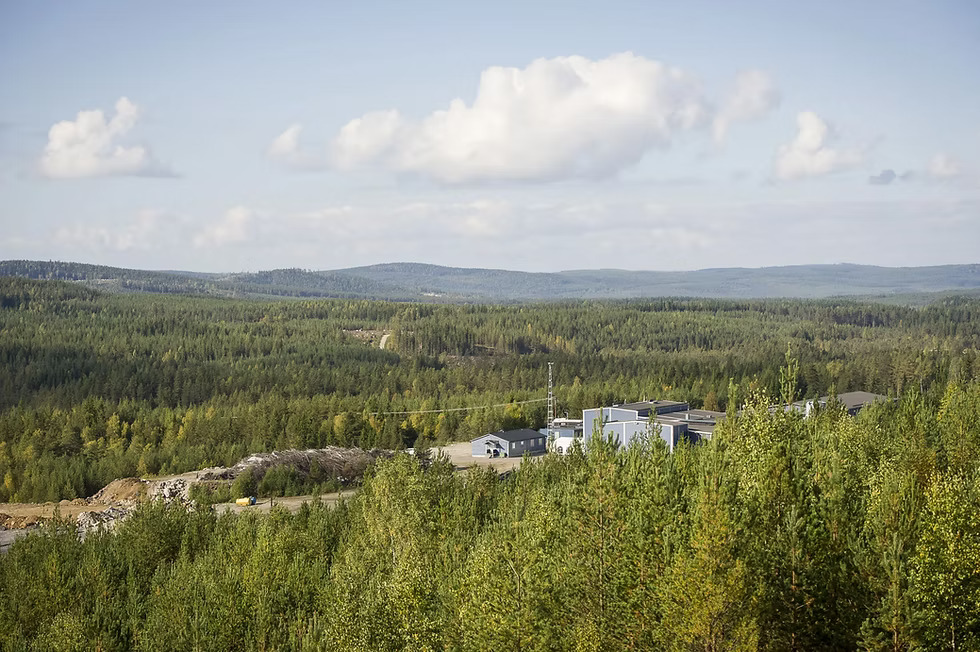
The Norra Kärr deposit was discovered by Tasman Metals (a predecessor company to Leading Edge Materials) in 2009. Credit: Leading Edge Materials
The Swedish government has granted Leading Edge Materials a 25-year mining lease for what the company calls one of the most significant rare earth deposits in Europe.
In a statement on Monday, the Canadian critical minerals explorer said its Norra Kärr project in southern Sweden was awarded the exploitation concession following a formal recommendation from the country’s mining inspectorate endorsing its development.
According to Leading Edge, a decisive factor in the government’s decision was the project’s strategic importance to Sweden and the EU, citing a prior study by the Geological Survey of Sweden that confirmed Norra Kärr as one of Europe’s richest rare earth deposits.
Specifically, the report highlighted the project’s particularly high proportion of the so-called “heavy rare earths” — terbium, dysprosium and yttrium — all of which are key inputs in the production of permanent magnets used in electric vehicles, wind turbines and other advanced technologies, including defense applications.
With no rare earth production anywhere in the EU today, the government concluded that supplying Sweden and Europe with these critical raw materials clearly outweighs competing land-use interests, the company said.
“The government’s decision affirms that this is a strategically important heavy rare earth deposit, located in a Tier 1 jurisdiction,” Kurt Budge, CEO of Leading Edge, commented in a press release.
Shares of Leading Edge Materials soared nearly 28% following the announcement, taking the company’s market capitalization to approximately C$85 million ($59.8 million).
Rich in heavy rare earths
In the company’s release, Budge also noted that the Norra Kärr project has “the capacity to supply all of Europe’s annual dysprosium requirements alongside meaningful terbium and yttrium production,” offering a “realistic solution” to the continent as it looks to reduce its reliance on Chinese imports.
A 2021 preliminary economic assessment (PEA) on the project had outlined a potential 26-year mine operation producing an average of 5,340 tonnes per annum of mixed rare earth oxides (MREOs), based on material representing approximately 30% of the project’s inferred resource of 110 million tonnes grading 0.5% total rare earth oxides (TREOs). Miningnews digest
Norra Kärr deposit could help make the EU self-sufficient in rare earth metals – study
A key differentiator of the project, said Leading Edge, was its high ratio of the far scarcer heavy rare earths (dysprosium and terbium) to light rare earths (neodymium and praseodymium) contained within the resource. At 2.5 to 1, it means that for every kg of NdPr produced, Norra Kärr is expected to yield 0.4 kg of DyTb. Meanwhile, the average ratio for projects in its peer group is 38.5 to 1, it said.
Based on older and much lower rare earth prices for Dy and Tb, the PEA report gave Norra Kärr a post-tax net present value (at 10% discount) of $762 million, an internal rate of return of 26.3%, and average annual EBITDA of $206 million.
PFS, permitting next
With the mining lease now secured, Leading Edge said it will move the project towards an updated pre-feasibility study (PFS) and enter talks with potential offtake partners and financiers in order to bring Norra Kärr into production.
“With European supply chain resilience now a policy imperative, Leading Edge Materials is on track to develop Europe’s first heavy rare earths mine,” Budge said.
At the same time, the company will also look to advance its environmental permitting process, pledging that it will be “developed to the highest environmental standards, in close dialogue with the local community, including those who remain skeptical of the project.”
The Norra Kärr project previously had its mining concession revoked in 2016 due to environmental concerns, three years after its initial issuance. Since then, Leading Edge has taken steps to address those concerns and reduced the project to a 65% smaller footprint.
-
energy_isere
- Modérateur
- Messages : 106749
- Inscription : 24 avr. 2005, 21:26
- Localisation : Les JO de 68, c'était la
- Contact :
Re: Terres rares : Exploration et production miniére
suite de ce post du 16 nov 2025 : viewtopic.php?p=2418400#p2418400
https://www.mining.com/tactical-resourc ... -advances/Tactical Resources eyes Nasdaq debut as Texas rare earths project advances
Amanda Stutt | June 29, 2026
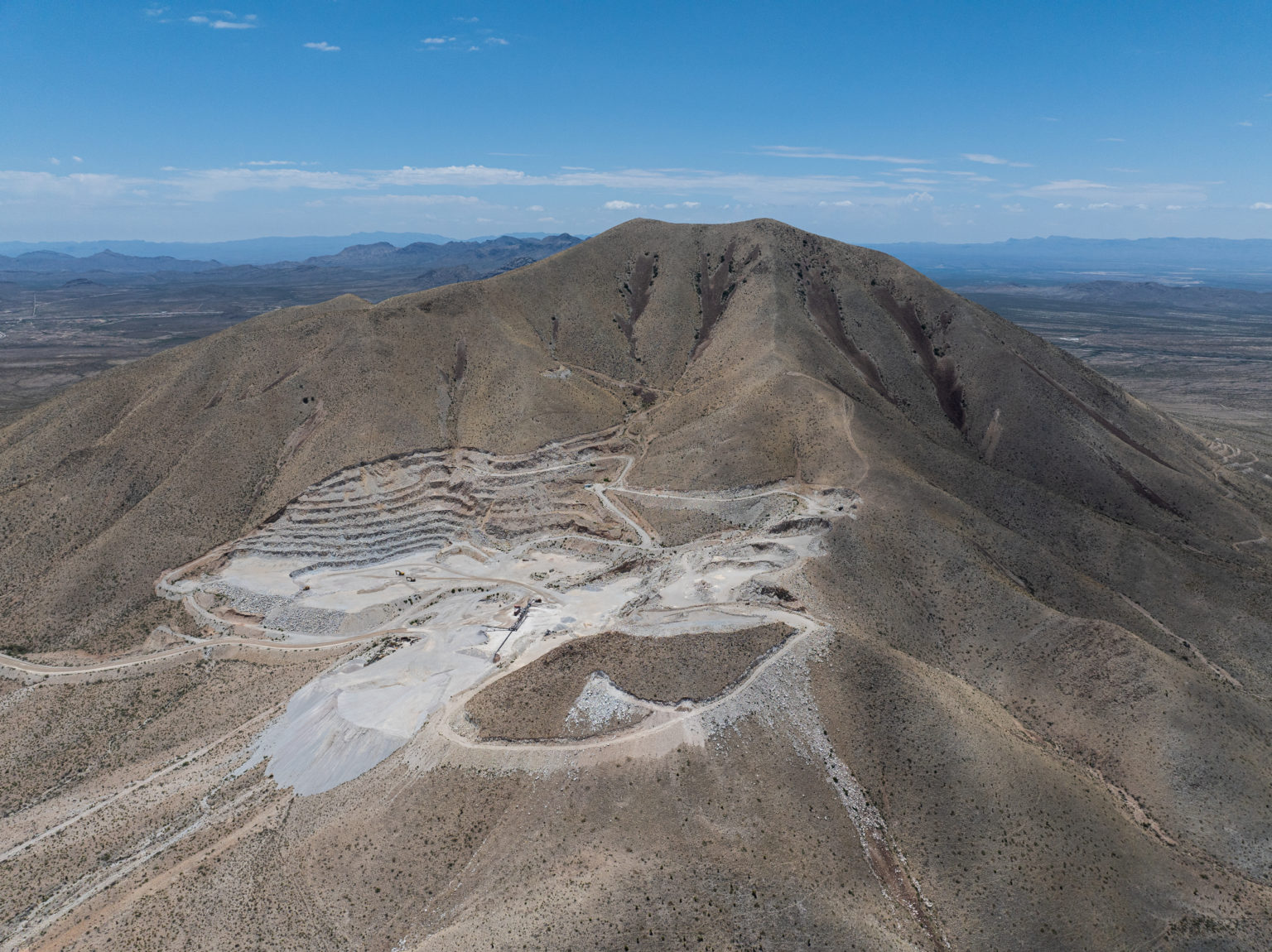
The Peak project in Texas. Image: Tactical Resources.
Vancouver-based rare earths developer Tactical Resources is preparing to move its listing to Nasdaq through a SPAC transaction with Plum Acquisition Corp. III as the company advances plans to develop a rare earth processing operation in Texas aimed at supplying the growing U.S. critical minerals supply chain.
Tactical is currently developing the Peak project located southeast of El Paso, Texas, with the aim of becoming the next rare earth elements (REE) producer on American soil. Its flagship project contains the exclusive rights to acquire REE-enriched tailings and stockpiled materials extracted from the Sierra Blanca quarry.
The miner views Peak as one of only a few hard-rock direct-leach-extractable projects in the world, with initial quarry operating permits already in place.
The company controls what it believes is one of the only production-ready rare earth assets in the United States — ~4 million tons of REE-bearing tailings already mined and stockpiled at a quarry site in West Texas, with an agreement in place to acquire the quarry itself.
While most domestic rare earth projects are still a decade out from production, Tactical’s feedstock-first model skips the traditional mine development cycle, with no new mining or permitting required and the company says is positioning to move directly into processing.
Chief executive officer Ranjeet Sundher said the company expects to complete its uplisting in 2026, declining to provide a specific timeline due to regulatory restrictions.
“We’re really a U.S. story,” Sundher told MINING.COM in an interview. “Our project is in Texas, and we believe that a Nasdaq listing will open up many more doors as far as capital and partnerships.”
The company currently trades on the TSX Venture Exchange and OTC markets and plans to delist from both upon completion of the transaction.
Tactical’s flagship project is located near about two miles from USA Rare Earth’s Round Top deposit.
Unlike many rare earth developers focused on delineating resources, Tactical is advancing a project built around processing material already available at an operating quarry.
The site has existing infrastructure, including power, water, rail access and crushing facilities, Sundher said.
For more than two decades, the operation has produced railway ballast, generating stockpiles of material that Tactical believes are enriched in rare earth elements.
According to Sundher, the company recently completed an option to purchase agreement of the underlying quarry operation, which would give it control over the land, mineral rights, equipment and stockpiled material once executed.
“Our tailings purchase and option agreement are now in place,” he said. “We can now work towards repurposing a rock quarry for railway ballast into the next rare earth producer in the US.”
The company estimates there are approximately four million tonnes of tailings available on site, which Sundher said could support the first five years of planned operations while further geological work is undertaken.
Processing-first strategy
Tactical’s development plan differs from many rare earth projects by focusing initially on processing and separation rather than resource expansion.
The company plans to process material through a pilot-scale program to produce rare earth oxides before advancing to separation of individual rare earth elements and securing offtake agreements with downstream customers.
Sundher said the project is particularly focused on heavy rare earth elements such as dysprosium, terbium and yttrium, which are critical components in high-performance permanent magnets used in electric vehicles, defense systems, robotics and other advanced technologies.
One of the project’s key advantages, he said, is that the mineralization appears amenable to direct-leach extraction, potentially reducing the number of processing steps required compared with conventional hard-rock rare earth operations.
“We bypass many of the traditional rare earth processing steps,” Sundher said.
The company plans to develop a demonstration processing plant at the site before scaling operations through a modular approach.
Benefiting from policy tailwinds
Tactical’s plans come amid growing US efforts to build domestic supplies of critical minerals and reduce dependence on Chinese processing capacity.
Sundher said federal policy support for domestic critical mineral production has strengthened considerably over the past two years, creating a more favourable environment for projects capable of producing and processing rare earth materials in the United States.
The company is also evaluating opportunities to secure government funding as it advances the project.
“We’re one of the few companies that have materials ready to process,” Sundher said. “One of the reasons we’re pushing so hard on creating materials from our site and demonstrating separation capability is to show that we tick all the boxes.”
With infrastructure already in place and processing studies advancing, Tactical is positioning itself as a potential participant in the emerging US rare earth supply chain at a time when demand for domestically sourced critical minerals is on a steep trajectory.
-
energy_isere
- Modérateur
- Messages : 106749
- Inscription : 24 avr. 2005, 21:26
- Localisation : Les JO de 68, c'était la
- Contact :
Re: Terres rares : Exploration et production miniére
https://oilprice.com/Company-News/Peabo ... oming.htmlPeabody Wins DOE Backing to Advance Rare Earth Production in Wyoming
By Charles Kennedy - Jul 08, 2026
Peabody has been selected by the U.S. Department of Energy (DOE) for funding to advance the production of rare earth elements (REEs) and critical minerals, adding federal support to the company's efforts to develop new revenue streams from its coal mining operations in Wyoming's Powder River Basin.
The funding will support Peabody's ongoing evaluation of extracting rare earth elements and other critical minerals from its extensive resource base in the basin, where the company says it already moves more earth annually than any other coal producer. That operational scale, combined with existing mining infrastructure, could provide an advantage in developing a domestic supply of materials essential for advanced technologies, defense applications and the energy transition.
The DOE selection follows a grant awarded earlier this year by the Wyoming Energy Authority for the same initiative, marking another step in the company's effort to demonstrate the technical and economic feasibility of recovering critical minerals from coal-related resources.
Peabody President and CEO Jim Grech said the latest award reflects progress made on the project and thanked the Trump administration and the Department of Energy for supporting efforts to strengthen the U.S. critical minerals supply chain.
The announcement comes as Washington continues to prioritize domestic production of rare earth elements and critical minerals to reduce reliance on foreign suppliers, particularly China, which dominates much of the global processing market. The DOE has increasingly backed projects aimed at recovering these materials from unconventional sources such as coal ash, mine waste and coal-bearing formations.
For Peabody, the initiative represents an opportunity to leverage its existing coal operations while expanding into the growing critical minerals sector, which is expected to play a central role in supplying materials for electric vehicles, renewable energy technologies, electronics and defense systems.
Mouais, c'est vraiment trés vague la façon dont Peabody va extraire des terres rares du charbon.

-
energy_isere
- Modérateur
- Messages : 106749
- Inscription : 24 avr. 2005, 21:26
- Localisation : Les JO de 68, c'était la
- Contact :
Re: Terres rares : Exploration et production miniére
https://www.mining-technology.com/news/ ... y/?cf-viewAlcoa to build gallium plant at Wagerup refinery
Alcoa will manage both the construction and operation of the production plant.
Srivani Venna July 15, 2026
ustralia, Japan, the US and aluminum producer Alcoa have confirmed their final investment decision to establish a gallium production facility at the company’s Wagerup alumina refinery.
This project aims to strengthen critical minerals supply chains, with gallium being vital for technologies such as semiconductors and defence applications.
Alcoa will manage both the construction and operation of the production plant, employing its expertise in alumina refining and mineral processing.
Global gallium supplies are highly concentrated, and this new facility is intended to diversify supply and increase resilience across several key industries.
Alcoa president and CEO William Oplinger said: “The project underscores the strategic importance of Western Australia [WA] and the role Alcoa’s operations play in delivering critical materials essential to the global economy.”
Construction is expected to start after site preparations are finalised, with no need for additional bauxite mining as the plant will leverage bauxite already refined at the site.
The gallium facility will occupy approximately three hectares of cleared land in the south-eastern part of the Wagerup refinery site in WA. It will be a relatively modest addition, taking up less than 2% of the refinery’s total area and processing around 10% of its liquor stream.
......................
-
energy_isere
- Modérateur
- Messages : 106749
- Inscription : 24 avr. 2005, 21:26
- Localisation : Les JO de 68, c'était la
- Contact :
Re: Terres rares : Exploration et production miniére
suite ce ce post du 16 mai 2026 : viewtopic.php?p=2424180#p2424180 au sujet du prospect de Kameelburg
https://www.agenceecofin.com/actualites ... en-namibieTerres rares : l’australien Aldoro veut lever 3 millions $ pour son projet en Namibie
Agence Ecofin 20 juillet 2026
En Namibie, Kameelburg figure parmi les projets vitrines d’une filière des terres rares encore émergente. L’actif dispose actuellement d’environ 520 millions de tonnes de ressources minérales, une base qu’Aldoro Resources entend renforcer à travers de nouveaux travaux d’exploration.
Aldoro Resources, junior minière cotée à la Bourse australienne ASX, a annoncé lundi 20 juillet avoir conclu des accords en vue de lever 4,3 millions de dollars australiens (environ 3 millions USD) auprès d’investisseurs. L’opération vise principalement à financer la poursuite du développement de son projet de terres rares Kameelburg, en Namibie.
Le financement prend la forme d’une émission d’obligations convertibles non garanties. Concrètement, il s’agit d’un mécanisme par lequel une entreprise emprunte des fonds auprès d’investisseurs, tout en leur offrant la possibilité de convertir ultérieurement cette créance en actions de la société. Les capitaux mobilisés serviront à accélérer la prochaine phase de développement de Kameelburg, avec au programme la réalisation d’une étude économique préliminaire, la poursuite des démarches d’obtention des permis nécessaires et de nouveaux programmes de forage.
Cette volonté d’accélérer le projet s’inscrit dans la continuité d’une précédente levée de fonds réalisée en mai dernier. Aldoro entend ainsi disposer des ressources nécessaires pour faire progresser un actif qui héberge déjà environ 520 millions de tonnes de ressources minérales, à une teneur moyenne de 2,49 % d’équivalent TREO. L’objectif est de préparer progressivement les conditions d’une éventuelle exploitation industrielle, en poursuivant l’extension de la base de ressources et en définissant les premiers paramètres techniques et économiques du projet à travers l’étude économique préliminaire.
Dans un contexte marqué par un intérêt croissant pour les terres rares, utilisées notamment dans les véhicules électriques, les éoliennes, l’électronique ou encore les technologies de défense, cette nouvelle étape pourrait être déterminante pour Aldoro. En parallèle, la société explore un projet de seconde cotation à la Bourse de Hong Kong, une initiative susceptible d’élargir sa base d’investisseurs tout en la rapprochant de l’écosystème chinois, premier pôle mondial de production et de raffinage de terres rares.
Pour la Namibie, ces investissements illustrent l’intérêt grandissant suscité par une filière encore émergente. Aux côtés de Kameelburg, le pays compte également plusieurs autres projets avancés, notamment Lofdal et Eisenberg. Si ces différents chantiers demeurent tributaires de nombreuses étapes techniques, réglementaires et financières avant une éventuelle mise en production, leur concrétisation pourrait à terme générer des retombées économiques pour le pays, à travers les recettes minières, les emplois et les investissements au profit des communautés locales.
-
energy_isere
- Modérateur
- Messages : 106749
- Inscription : 24 avr. 2005, 21:26
- Localisation : Les JO de 68, c'était la
- Contact :
Re: Terres rares : Exploration et production miniére
suite de ce post du 02 fev 2026 : viewtopic.php?p=2421439#p2421439
https://www.mining.com/japan-finds-heav ... d-deposit/Japan finds heavy rare earths dominate seabed deposit
Staff Writer | July 24, 2026 |
Japan said on Friday that medium and heavy rare earth elements accounted for about 54% of the rare earth content in deep-sea mud recovered off a remote Pacific island, bolstering its push to secure domestic supplies of critical minerals as China tightens export controls.
The government-backed mining vessel Chikyu recovered about 50 tonnes of mud during a month-long mission completed in February near Minamitori Island, about 1,900 km southeast of Tokyo.
The expedition marked the world’s first successful continuous recovery of rare earth-bearing seabed mud from a depth of about 6 km.
“The trial is expected to verify the feasibility of domestic rare earth production,” Kazushige Kikuchi, project manager at the Japan Agency for Marine-Earth Science and Technology, told Reuters. A comprehensive assessment of the project’s commercial potential is due by March 2028.
Cut China reliance
The project could help Japan reduce its dependence on China for strategic minerals used in defence equipment, electric vehicles and advanced technologies. Beijing imposed export controls on some heavy rare earths and related magnets in April 2025 before tightening restrictions on shipments to Japan in January and twice more the following month.
Japan’s government did not disclose the size of the rare earth deposit or the concentration of material in the recovered mud. Officials said the limited duration and geographic scope of the sampling program provided insufficient data for a broader resource estimate.
Analysis identified yttrium, used in aerospace, energy and semiconductor applications; gadolinium, used in magnetic resonance imaging and other high-tech products; and dysprosium, an essential component in high-performance magnets for electric vehicles.
In 2024, researchers from the University of Tokyo and the Nippon Foundation had already identified over 200 million tonnes of manganese nodules rich in battery metals in the Pacific Ocean, highlighting vast resource potential at depths around 5,500 meters.
A separate survey by the University of Tokyo and the Nippon Foundation estimated the seabed nodules contain approximately 610,000 tonnes of cobalt—enough for 75 years of Japan’s consumption—and 740,000 tonnes of nickel, covering 11 years of domestic demand.
Commercial test
Japan plans a new month-long mining trial in the same waters beginning in February 2027, targeting production of 350 tonnes of mud a day.
The material will be dewatered on Minamitori Island, about 1,900 km southeast of Tokyo, before being shipped to the mainland for separation, refining and smelting tests.
The pilot program is designed to determine whether the offshore resource can support commercial rare earth production and reduce Japan’s dependence on imported supplies.
-
energy_isere
- Modérateur
- Messages : 106749
- Inscription : 24 avr. 2005, 21:26
- Localisation : Les JO de 68, c'était la
- Contact :
Re: Terres rares : Exploration et production miniére
suite de ce post du 21 fev 2026 : viewtopic.php?p=2421875#p2421875
https://www.agenceecofin.com/actualites ... ci-mi-2028Terres rares à Madagascar : la mine Ampasindava attendue en production d’ici mi-2028
Agence Ecofin 29 juillet 2026
A mesure que s’intensifie la quête de sources alternatives de terres rares, chaque projet potentiel attire une attention croissante. C’est le cas d’Ampasindava, à Madagascar, où Washington cherche déjà à se positionner comme partenaire de développement.
À Madagascar, la future mine de terres rares Ampasindava devrait entrer en production d’ici la mi-2028, selon des propos attribués à Andrew Murphy, président exécutif de son opérateur Harena Rare Earths, et relayés mardi 28 juillet par Reuters. Cette échéance s’inscrit dans le calendrier jusqu’ici avancé par la société, qui affirme désormais être engagée dans les démarches nécessaires à la concrétisation du projet.
Dans une étude de préfaisabilité publiée plus tôt cette année, Harena Rare Earths indiquait vouloir développer sur le site une mine capable de produire 71 000 tonnes d’oxydes de terres rares (TREO) sur une durée de vingt ans. L’investissement est estimé à 142 millions USD, tandis que le lancement des travaux de développement est envisagé en 2027. Le nouvel objectif de mise en production vient ainsi conforter cette trajectoire, alors que la compagnie espère obtenir « dans les prochaines semaines » le permis d’exploitation indispensable au démarrage des travaux de construction.
Si ce calendrier est respecté, Harena Rare Earths pourrait s’imposer comme un nouveau fournisseur sur un marché devenu hautement stratégique. Essentielles à la fabrication des batteries de véhicules électriques, des éoliennes et de nombreux équipements électroniques, les terres rares restent largement dominées par la Chine, aussi bien dans l’extraction que dans le raffinage.
Cette forte concentration des capacités renforce l’intérêt porté à chaque nouveau projet susceptible de diversifier les sources d’approvisionnement mondiales. C’est dans ce contexte que s’inscrit le récent engagement de l’U.S. International Development Finance Corporation (DFC) qui prévoit d’investir 4,84 millions USD dans le développement d’Ampasindava.
Pour autant, plusieurs étapes restent à franchir avant de concrétiser cette ambition. Harena devra notamment réunir les financements nécessaires et mener à bien l’étude de faisabilité définitive destinée à confirmer la viabilité économique du projet. Harena n’est d’ailleurs pas le seul acteur engagé sur ce créneau. D’autres projets de terres rares progressent en parallèle sur le continent, notamment Kangankunde (Lindian Resources), au Malawi, et Longonjo (Pensana), en Angola, dont les mises en production sont actuellement attendues respectivement en 2026 et en 2027.
-
energy_isere
- Modérateur
- Messages : 106749
- Inscription : 24 avr. 2005, 21:26
- Localisation : Les JO de 68, c'était la
- Contact :
Re: Terres rares : Exploration et production miniére
suite de ce post du 21 sept 2025 : viewtopic.php?p=2416803#p2416803
https://www.latribune.fr/article/entrep ... rres-raresLe Pentagone va investir 400 millions de dollars dans une mine australienne de terres rares
latribune.fr Publié le 08 août 2026
Ce prêt va permettre aux États-Unis de s'approvisionner en scandium australien.
Le Pentagone a fait une promesse de prêt de 400 millions de dollars (346 millions d'euros) pour la construction d'une mine productrice de scandium en Australie, a annoncé samedi l'entreprise locale Sunrise Energy Metals.
Cet engagement sous condition du ministère de la Défense américain porte sur la construction de la première mine primaire au monde de cette terre rare, c'est-à-dire pour l'extraction de la ressource directement de sa roche d'origine. Le scandium, utilisé dans l'industrie de la défense, l'aviation ou encore les centres de données, est habituellement un sous-produit d'autres activités minières.
« Nous avons pour objectif de faire de Syerston un pilier de l'approvisionnement de l'Occident en scandium », a déclaré dans un communiqué le président de Sunrise, Robert Friedland, en référence à ce projet de mine à Fifield, dans l'État de Nouvelle-Galles du Sud (sud-est). Selon le gouvernement régional, la Nouvelle-Galles du Sud présente l'une des concentrations de scandium les plus importantes de la planète.
Briser le monopole de Pékin
Pour le moment, cependant, la Chine a le quasi-monopole mondial pour la production et le raffinage des terres rares, et domine largement le marché du scandium. Surtout, la Chine a appliqué des restrictions à ses exportations de cette terre rare pour des produits liés à la défense en 2025, ce qui a poussé les États-Unis à chercher de nouveaux fournisseurs.
Le président américain avait signé en octobre un accord avec le Premier ministre australien Anthony Albanese dans l'optique de se libérer de la dépendance aux minerais chinois. Les deux pays avaient alors promis d'investir chacun un milliard de dollars dans des projets.
-
energy_isere
- Modérateur
- Messages : 106749
- Inscription : 24 avr. 2005, 21:26
- Localisation : Les JO de 68, c'était la
- Contact :
Re: Terres rares : Exploration et production miniére
suite de ce post du 24 janvier 2012 : viewtopic.php?p=308988#p308988
https://www.mining.com/hades-licence-wi ... earth-map/Hades licence win puts Germany on rare earth map
Cecilia Jamasmie | August 4, 2026
Startup Hades has secured an exploration licence for the Storkwitz rare earth project in eastern Germany, giving Europe’s largest economy access to one of its few domestic rare earth deposits as the region races to secure supplies of critical minerals.
The Saxon Mining Authority granted the licence on July 31, allowing the Munich-based company to explore a 28.4-sq.-km area near Delitzsch in northern Saxony. Historical surveys suggest the property hosts about 38,000 tonnes of rare earth oxides and 8,000 tonnes of niobium pentoxide, although Hades has yet to define a resource under internationally recognized reporting standards.
Rare earth elements are essential for permanent magnets used in electric vehicles, wind turbines, defence systems and electronics. Europe remains heavily dependent on imports, particularly from China, making domestic projects increasingly important as governments seek to diversify supply chains.
“Germany now has its own rare earth project — one of only a few in Europe,” chief executive Max Werner said in an emailed statement. “The licence is a milestone for Hades on a clear path from pre-seed and seed capital to a concrete, licensed resource.”
The project adds to a small but growing pipeline of European critical minerals developments aimed at supporting the EU’s Critical Raw Materials Act and reducing the bloc’s exposure to geopolitical supply risks.
Lower-impact mining
Hades said it plans to evaluate the deposit using its proprietary Cerberus laser drilling technology, which it says can reduce drilling costs by more than 50% compared with conventional methods. The company also intends to assess in-situ recovery, a technique that extracts minerals using injected fluids rather than conventional open-pit mining, reducing surface disturbance if geological conditions prove suitable.
The company, founded just last year, said it has already raised €20 million ($23 million) in two venture capital financing rounds. Hades aims to build a vertically integrated business spanning exploration, development and production of critical raw materials in Europe.
-
energy_isere
- Modérateur
- Messages : 106749
- Inscription : 24 avr. 2005, 21:26
- Localisation : Les JO de 68, c'était la
- Contact :
Re: Terres rares : Exploration et production miniére
suite de ce post du 09 juillet 2023 : viewtopic.php?p=2373125#p2373125
https://www.mining.com/updated-feasibil ... valuation/Updated feasibility study gives NioCorp’s Elk Creek critical minerals project a $4B valuation
Staff Writer | August 11, 2026
Elk Creek project site in Nebraska. Credit: NioCorp
NioCorp Developments (NASDAQ:NB) released on Tuesday the results of an updated feasibility study for its Elk Creek critical minerals project in southeastern Nebraska.
he study outlines the project’s evolution into a 40-year, integrated U.S. operation with a net present value (NPV) exceeding $4 billion that is expected to produce eight critical-mineral products from a single ore body, the company said.
The 2026 feasibility study estimates a pre-tax net present value at an 8% discount of $4.1 billion, an after-tax NPV8% of $3.4 billion, a pre-tax internal rate of return (IRR) of 24% and an after-tax IRR of 22.8%.
Over the projected mine life, the Elk Creek project is projected to generate approximately $37.4 billion in life-of-mine revenue, $608 million in average annual EBITDA2, and $519 million in average annual operating cash flow.
The Elk Creek project is expected to produce eight products, all designated by the US Government as critical minerals: ferroniobium scandium trioxide, titanium tetrachloride, and several rare earth oxide products, including neodymium-praseodymium oxide, dysprosium oxide and terbium oxide, samarium-europium-gadolinium carbonate, and heavy rare earth carbonate.
This expanded product suite positions the Elk Creek Project to serve multiple US critical-mineral and defense supply chains from an integrated mine and processing facility that has secured its major construction-related permits, NioCorp said.
“Our 2026 feasibility study transforms the Elk Creek project into the kind of critical minerals project the United States needs to have online as soon as possible,” NioCorp CEO Mark A. Smith said in a news release.
“Few critical minerals projects in the U.S. can match the Elk Creek Project’s combination of a 40-year mine life, all major construction-related permits already in hand, and the planned production of eight critical mineral products from a single ore body.”
“The United States is heavily reliant on imports for every single one of the products that NioCorp plans to manufacture,” Smith said. “NioCorp offers an American-made solution: secure, long-term domestic production of materials essential to national defense, advanced manufacturing, energy resilience, and the technologies that will power the U.S. economy for decades to come.”
NioCorp’s stock closed the day down 1.6% on the NASDAQ. The company has a $780.3 million market capitalization.

-
energy_isere
- Modérateur
- Messages : 106749
- Inscription : 24 avr. 2005, 21:26
- Localisation : Les JO de 68, c'était la
- Contact :
Re: Terres rares : Exploration et production miniére
https://www.agenceecofin.com/actualites ... nte-muambeTerres rares : le soutien de Washington fait avancer le projet mozambicain Monte Muambe
Agence Ecofin 21 aout 2026
L’Afrique est régulièrement présentée comme une alternative à la domination chinoise sur l’approvisionnement mondial en terres rares. Alors que ses investisseurs privés restent prudents face aux projets sur le continent, Washington multiplie les initiatives pour faire avancer certains gisements.
Le projet mozambicain de terres rares Monte Muambe va avancer vers une étude de préfaisabilité grâce au soutien des États-Unis. Son propriétaire britannique NeoTerra (anciennement Altona Rare Earths) a annoncé, jeudi 20 août, le choix de Valentine Enterprises pour piloter cette étude financée par l’US Trade and Development Agency (USTDA) à hauteur de 1,875 million de dollars.
Une fois cette sélection validée par l’agence américaine, Valentine Enterprises travaillera avec SGS North America, chargé notamment des essais métallurgiques et de l’ingénierie des procédés, ainsi qu’avec New Dominion Consulting, spécialisé dans les chaînes d’approvisionnement, les achats et les opérations. L’étude devrait commencer le mois prochain par une réunion de lancement et une visite du site, avant une courte campagne de forage destinée à récupérer des échantillons pour les essais métallurgiques. Cette étape vise à permettre à NeoTerra de mieux préciser les paramètres techniques et économiques de Monte Muambe avant d’envisager les phases suivantes de son développement.
Les capitaux publics en éclaireurs des investisseurs privés
Le soutien de l’USTDA au Mozambique s’inscrit dans une stratégie américaine plus large visant à développer des chaînes d’approvisionnement en minéraux critiques moins dépendantes de la Chine. Selon Reuters, l’International Development Finance Corporation (DFC) a déjà engagé 62,8 millions de dollars dans des projets de terres rares au Malawi, en Angola, à Madagascar et en Afrique du Sud. Des responsables de la DFC reconnaissent néanmoins que le capital privé reste largement absent. Les financements publics peuvent donc être perçus comme un moyen d’amener certains projets à un stade avancé en vue d’attirer les investisseurs.
Washington peut contribuer à réduire une partie des incertitudes techniques, mais il ne garantit pas la construction d’une mine ni la disponibilité de débouchés pour écouler la production. Une fois l’étude de préfaisabilité validée, plusieurs chantiers attendent donc NeoTerra, y compris le financement d’une étude de faisabilité définitive, la recherche de capitaux pour construire une éventuelle mine et des accords de ventes des volumes extraits ensuite.
-
energy_isere
- Modérateur
- Messages : 106749
- Inscription : 24 avr. 2005, 21:26
- Localisation : Les JO de 68, c'était la
- Contact :
Re: Terres rares : Exploration et production miniére
suite de ce post du 09 avril 2023 : viewtopic.php?p=2366940#p2366940
https://www.boursorama.com/actualite-ec ... f2fc7f4b2bAux Etats-Unis, des terres rares extraites d'anciennes mines de charbon
AFP •22/08/2026
Dans les Appalaches, aux Etats-Unis, l'eau rougeâtre qui s'échappe d'anciennes mines de charbon est acide, chargée en métaux lourds et toxique pour l'environnement. Mais elle contient aussi des terres rares, indispensables à de nombreuses technologies et devenues un enjeu géopolitique majeur.
Elles sont utilisées pour fabriquer des aimants très résistants, employés dans les véhicules électriques, les éoliennes, mais aussi les drones ou les avions de combat.
Cette ressource stratégique est au coeur de la rivalité entre les Etats-Unis et la Chine, qui domine largement sa production et son raffinage.
Ce quasi-monopole est perçu comme un risque par Washington, qui tente de réduire sa dépendance à Pékin en cherchant de nouveaux fournisseurs et en développant une filière domestique.
Le pays ne possède qu'une seule mine de terres rares, à Mountain Pass (Californie), d'où sont principalement extraits des éléments dits "légers". Les "lourds", plus difficiles à obtenir et plus recherchés, viennent largement de l’étranger.
"Ce qui nous manque au niveau national, ce sont les matières premières", souligne Mark Gavin, vice-recteur de l'université de Virginie-Occidentale (WVU).
Des chercheurs de son université ont cependant découvert il y a une dizaine d'années que le drainage minier acide, une pollution causée par l'exploitation minière, contenait certaines de ces terres rares.
"Assainissement"
Avec des financements publics, ils ont développé une installation pilote dans une ancienne mine de charbon des Appalaches, à Mount Storm (est).
L'eau qui s'écoule de la mine est d'abord récupérée dans un bassin où des plages ocres, caractéristiques du drainage minier acide, sont visibles.
Elle est ensuite acheminée dans la petite usine à flanc de colline, où elle passe par trois piscines et subit un traitement qui permet d'éliminer les polluants et d'en extraire un concentré de terres rares.
Quand elle ressort, à l'autre bout du bâtiment, pour être rejetée dans la nature, l'eau a une couleur presque turquoise.
"Cette opération remplit deux objectifs: l'assainissement de l'environnement et la récupération de terres rares, qui constituent un sous-produit précieux", commente Lance Lin, qui dirige ce projet.
Selon le chercheur, le procédé est d'autant plus avantageux que le drainage minier acide est riche en terres rares "lourdes", déjà dissoutes naturellement, et que leur récupération ne nécessite pas de créer de nouveau chantier minier.
Le potentiel de l'installation de Mount Storm est toutefois limité: environ quatre tonnes d'oxydes de terres rares par an, dont environ 45% sont "lourdes", selon Lance Lin. Une part infime de la demande américaine.
Pour constituer une source d'approvisionnement significative, l'université envisage notamment de déployer le dispositif sur d'autres sites en agrégeant les volumes.
"Si on produisait 300 tonnes de terres rares par an à partir de drainage minier acide, on pourrait répondre à 7 à 8 % de la demande mondiale" pour certaines terres rares lourdes, assure David Hoffman, ingénieur à la WVU.
"Approvisionnement minimum"
Ingénieur et spécialiste du développement de procédés d'extraction et de raffinage des terres rares, Tommee Larochelle doute de la viabilité commerciale du projet mais estime qu'il pourrait constituer "une source de terres rares pour assurer un approvisionnement minimum à l'industrie militaire".
"Si la volonté politique et le financement sont alignés, c'est réalisable à court terme", évalue-t-il.
Une fois le concentré de terres rares extrait, il doit encore être séparé en éléments individuels puis transformé. Or, les Etats-Unis ne disposent que de capacités limitées dans ce domaine.
Pour remédier à cette difficulté, Washington soutient massivement le développement d'entreprises de séparation, de raffinage et de fabrication d'aimants.
La start-up qui accompagne le projet de la WVU a conclu cette année un accord préliminaire avec l'une de ces entreprises, REalloys, pour traiter les terres rares extraites des eaux de drainage acide.
"Même en nous associant à ce type de partenaire, nous ne résoudrons pas l'intégralité du problème", concède Mark Gavin.
"Mais nous pouvons sans aucun doute intégrer dans la chaîne d'approvisionnement une quantité significative de terres rares lourdes qui permettront de produire les aimants dont nous avons besoin au niveau national. Sommes-nous la solution? Non. Faisons-nous partie de la solution? Absolument."
-
energy_isere
- Modérateur
- Messages : 106749
- Inscription : 24 avr. 2005, 21:26
- Localisation : Les JO de 68, c'était la
- Contact :
Re: Terres rares : Exploration et production miniére
https://www.mining.com/greenland-mines- ... ck-surges/Greenland Mines gets mineral exploration license for Safartoq project, stock surges
Amanda Stutt | August 21, 2026
Greenland Mines (NASDAQ: GRML) said Friday that the Government of Greenland, through the Ministry of Business and Mineral Resources (Naalakkersuisut), has formally approved the indirect transfer of Mineral Exploration License covering the Sarfartoq carbonatite complex to the company. The stock surged.
The approval, granted under the Greenland Mineral Activities Act, satisfies one of the key regulatory closing conditions for the company’s acquisition of the Sarfartoq project from Neo Performance Materials for $35 million.
As part of the deal, Neo Performance will receive offtake rights on up to 60% of future ore or mineral concentrate production from Sarfartoq.
The company has called the project one of the island’s “most advanced and compelling rare earth projects,” citing its high-grade nature and favorable Arctic logistics.
Located roughly 60 km from Kangerlussuaq in the southeast, the project is the site of a carbonatite-hosted deposit strongly enriched in Neodymium-Praseodymium (Nd-Pr).
The project carries a historic NI 43-101 Mineral Resource Estimate and a Preliminary Economic Assessment, is supported by more than 15 years of exploration work and over 23,000 meters of drilling,
A historic resource cited by the company showed that it contains roughly 27 million kg of Nd oxides and 8 million kg of Pr oxides, concentrated within one zone holding 5.88 million tonnes of indicated material grading 1.77% TREO (total rare earth oxides) and 2.46 million tonnes inferred grading 1.59% TREO.
“This approval from the Government of Greenland is a fundamental milestone for our company and for the future of Sarfartoq,” Greenland Mines president Bo Møller Stensgaard said in a news release.
“It reflects the strength of our relationships in Greenland and the confidence the Government places in our team to advance this project responsibly,” Stensgaard said. “Sarfartoq is one of the most important undeveloped neodymium-praseodymium resources in the Western world. This is a foundational step in building a genuine, Western-aligned rare earth supply chain from Greenland.”
Greenland Mines stock surged on the news, closing the day up over 22% on the NASDAQ. The company has a $31.4 million market capitalization.